
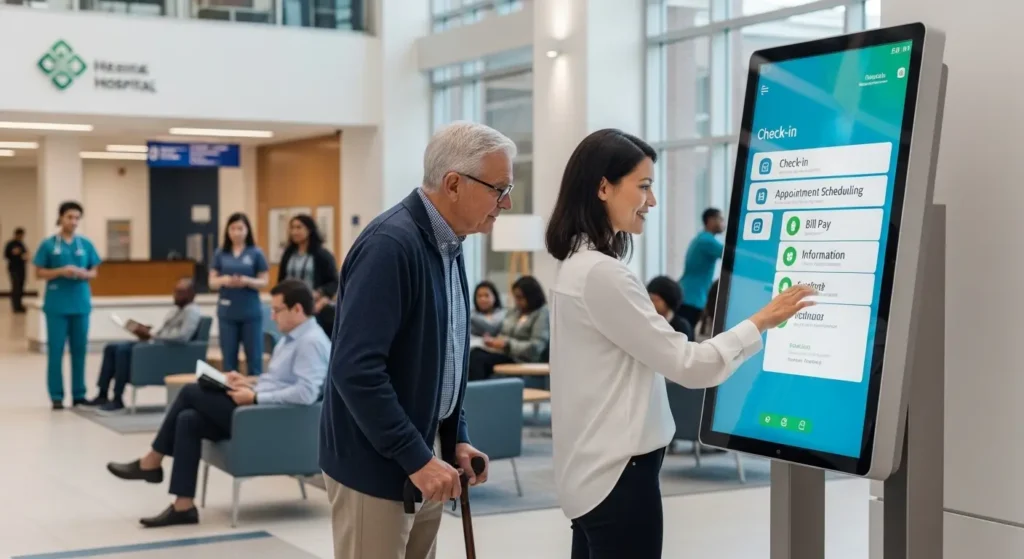
The healthcare industry is undergoing an unprecedented digital transformation. Hospitals, clinics, diagnostic centers, and medical institutions are adopting intelligent systems to handle rising patient volumes, reduce administrative pressure, and deliver faster, more efficient care. Among the most impactful innovations driving this shift are healthcare self-service kiosks—automated terminals designed to streamline patient registration, appointment scheduling, identity verification, payments, queue management, and access to medical information.
As patient expectations evolve toward speed, transparency, and contactless services, healthcare kiosks have become essential infrastructure for modern medical environments. They not only enhance the overall patient experience but also significantly improve operational efficiency for healthcare providers. This article explores how self-service kiosks are transforming medical facilities and why they are becoming indispensable in the digital healthcare ecosystem.
Creating a Seamless Patient Check-In and Registration Experience
Long queues and slow manual registration are some of the most common challenges in hospitals and clinics. Self-service healthcare kiosks eliminate these inefficiencies by enabling patients to complete check-in operations independently within minutes.
A typical self-service registration workflow includes:
-
Inputting or scanning patient ID
-
Retrieving appointment data from hospital HIS/PACS systems
-
Updating personal information digitally
-
Filling pre-consultation forms
-
Signing consent agreements electronically
-
Printing queue numbers or visit receipts
This streamlined process reduces wait times, decreases administrative workload, and allows patients to navigate the hospital environment more easily. Medical staff can then focus on critical care tasks rather than repetitive paperwork.
Supporting Appointment Scheduling and Intelligent Queue Management
Healthcare kiosks integrate directly with scheduling and queue systems to help patients manage their medical visits with ease. Through a simple touchscreen interface, patients can:
-
Schedule new appointments
-
Reschedule or cancel existing appointments
-
View expected wait times
-
Receive printed queue tickets
-
Check doctor availability in real time
For medical facilities, automated scheduling reduces no-show rates, increases utilization of consultation slots, and provides valuable insights into patient flow patterns. Intelligent queue management helps distribute patient volume more evenly, improving the efficiency of clinical departments.
Enhancing Payment Convenience With Multi-Channel Medical Billing Support
Medical billing is often complex and time-consuming. Self-service payment kiosks simplify the process by supporting multiple payment models and integrating directly with hospital billing systems.
Common supported payment functions include:
-
Outpatient and inpatient bill payment
-
Examination and test fee payment
-
Treatment and medication fee settlement
-
Insurance card scanning and verification
-
QR code, mobile wallet, and NFC payments
-
Cash and coin acceptance (optional)
-
Credit and debit card payments
This comprehensive payment support reduces congestion at cashier counters, accelerates medical workflows, and ensures accurate financial records. Patients enjoy faster, more flexible payment options, while hospitals benefit from automated reconciliation and reduced human errors.
Advanced Identity Verification and Secure Data Management
Patient identity verification is critical for maintaining medical safety, regulatory compliance, and data accuracy. Modern healthcare kiosks integrate advanced verification technologies, including:
-
National ID scanning
-
Passport readers
-
Health insurance card authentication
-
Facial recognition matching
-
Biometric verification (optional)
These systems ensure that patient information remains accurate, secure, and up to date. All data transmissions are encrypted to protect sensitive medical and personal information in compliance with healthcare privacy regulations.
Digital Document Handling and Paperless Workflow Support
Traditional medical processes rely heavily on printed forms, manual signatures, and physical paperwork. Healthcare kiosks support paperless workflows by enabling:
-
Digital form submission
-
Electronic signature collection
-
Online consent agreement signing
-
Automated data synchronization with HIS/EMR systems
-
Printing of essential documents only when necessary
By reducing the need for physical forms, hospitals can reduce waste, lower operational costs, and maintain more organized and searchable records.
Hospitals are often large, complex environments. Self-service kiosks can function as interactive navigation hubs that guide patients to their destinations.
Wayfinding features include:
-
Department maps
-
Floor directories
-
Route guidance display
-
Voice instructions for accessibility
-
Multilingual support
This empowers patients to move around independently, reducing confusion and improving overall hospital efficiency.
Driving Efficiency in Pharmacy and Laboratory Departments
Specialized healthcare kiosks support pharmacy and laboratory operations through:
Pharmacy automation tasks:
-
Prescription pickup verification
-
Payment settlement
-
Medication information display
-
Queue number distribution
Laboratory automation tasks:
-
Test result retrieval
-
Barcode or QR code scanning
-
Sample submission workflow assistance
These capabilities reduce crowding, accelerate service processes, and enhance the accuracy of patient service steps.
Built-In Durability for High-Volume Medical Environments
Healthcare environments require equipment that can withstand constant daily use. Medical kiosks are designed with industrial-grade components to ensure reliability and long service life.
Key hardware features include:
-
Medical-grade touchscreens
-
Anti-bacterial coating options
-
Vandal-resistant metal enclosures
-
High-speed thermal printers
-
Encrypted card readers
-
High-brightness displays for hospitals and clinics
-
Modular components for easy maintenance
-
Secure internal storage for cash and sensitive modules
This durability ensures consistent performance in busy hospital lobbies, clinics, and emergency departments.
Enhancing Accessibility for All Patients
Accessibility is essential in healthcare settings. Self-service kiosks incorporate inclusive design elements such as:
-
ADA-compliant height and interface layout
-
Large-text user interface
-
Voice-guided interaction
-
Braille support (optional)
-
Wheelchair-friendly angles
-
Multilingual instructions
These features ensure that patients of all physical abilities, ages, and backgrounds can easily complete their healthcare tasks independently.
Improving Operational Accuracy and Reducing Human Error
Manual data entry is time-consuming and prone to errors, which may affect diagnosis and treatment continuity. Automated healthcare kiosks significantly reduce human error through:
-
Pre-filled patient data retrieved from HIS
-
Digital document submission
-
Automated billing calculation
-
Standardized system prompts
-
Real-time data validation
This improved accuracy is crucial for maintaining patient safety and protecting medical integrity.
Integrating IoT and Cloud Technology for Unified Healthcare Operations
Healthcare kiosks serve as digital hubs connected to hospital IT infrastructure. With cloud integration and IoT connectivity, medical facilities can manage kiosks from a centralized platform:
-
Remote device monitoring
-
Automatic software updates
-
Usage analytics reports
-
Predictive maintenance alerts
-
Real-time transaction logging
Centralized management improves system uptime, reduces maintenance costs, and enhances facility-wide operational consistency.
Supporting Modern Smart Hospital Transformation
As global healthcare systems embrace smart hospital models, self-service kiosks play a crucial role in digital modernization. They support:
-
AI-assisted triage systems
-
Electronic medical record automation
-
Telemedicine integration
-
Digital health card systems
-
Cloud-based appointment management
-
Patient self-service empowerment
Kiosks reduce bottlenecks, enhance patient independence, and promote a more organized healthcare environment that aligns with the needs of modern medical institutions.
Conclusion: Healthcare Self-Service Kiosks Are Redefining Medical Efficiency and Patient Experience
Self-service kiosks have become essential tools for hospitals, clinics, and healthcare providers aiming to improve operational performance and patient satisfaction. By automating registration, scheduling, payments, identity verification, navigation, and document handling, these kiosks significantly reduce wait times, optimize staff workloads, and enhance service accuracy.
They create a more efficient, user-friendly, and technologically advanced medical environment—one that empowers patients and supports healthcare professionals in delivering better care. As medical institutions continue their digital transformation, self-service kiosks will remain a foundational technology driving the future of healthcare.
 English
  Spanish
  French
  German
  Portuguese
  Italian
  Russian
  Dutch
Dutch  Norwegian
  Arabic

