
Introduzione
Parking operators—whether managing commercial parking lots, shopping mall garages, municipal parking facilities, or airport parking structures—face increasing pressure to cut operational costs while maintaining efficient service. Rising labor costs, inconsistent cash handling, high maintenance demands on legacy systems, and customer expectations for speed have all pushed the industry to seek smarter, automated solutions.
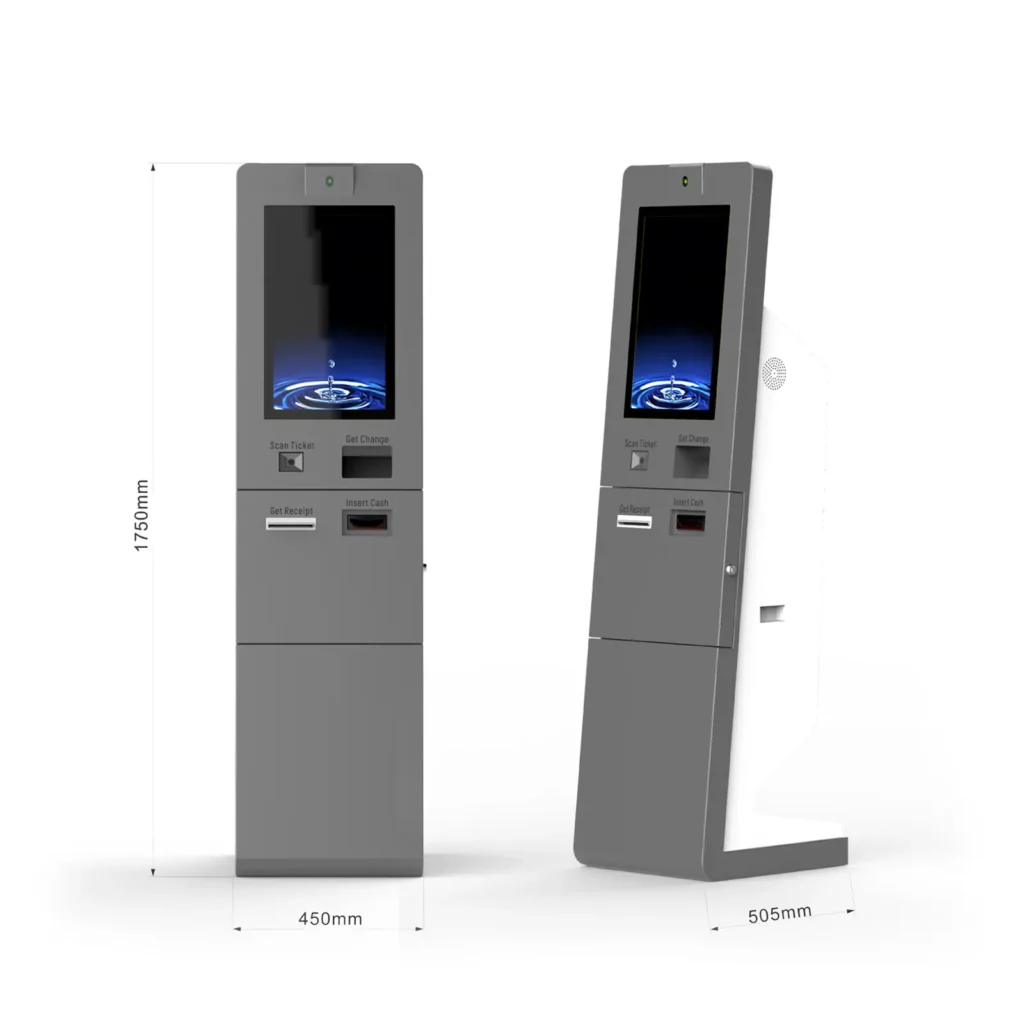
Parking payment kiosks have emerged as one of the most impactful technologies for modern parking operations. Unlike traditional booths with manual cashiers, self-service parking payment kiosks automate nearly every step of the process: ticket validation, fee calculation, payment processing, cash and coin handling, issuing receipts, and real-time data reporting.
This article explores in depth how parking payment kiosks reduce operational costs, enhance revenue accuracy, optimize labor allocation, and future-proof parking businesses. Whether you operate a small private parking area or a multi-site facility network, understanding these benefits can help you cut expenses while improving user experience.
1. Eliminating the High Cost of On-Site Cashiers
Staffing is one of the largest recurring expenses for parking operators. Traditional parking booths require cashiers to work multiple shifts, often covering early mornings, evenings, weekends, and holidays. Beyond wages, operators must also account for training, HR overhead, supervision, and potential staffing shortages.
Parking payment kiosks eliminate the need for full-time cashiers by enabling customers to:
-
Validate parking tickets
-
Scan license plates
-
Look up parking duration
-
Select parking type
-
Pay via cash, coin, card, mobile, QR Pay, NFC, or e-wallets
-
Print receipts
Instead of needing multiple cashiers per site, operators can reduce staffing to just minimal attendants or roaming supervisors responsible for multiple kiosks and locations.
This shift from labor-heavy to automation-driven operations dramatically lowers annual operating costs.
2. Reducing Cash-Handling Losses and Labor Errors
Manual cash handling is prone to mistakes, discrepancies, and shrinkage. Every cashier introduces variables:
-
Incorrect change returned
-
Miscounted cash during shift changes
-
Lost receipts
-
Human error in fee calculation
-
Fraud or theft risks
-
Increasing float management costs
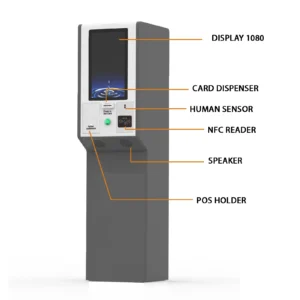
Parking payment kiosks integrate:
-
Cash acceptors
-
Coin acceptors and hoppers
-
Card acceptors
-
Barcode scanners
-
Smart cashier modules with audit trails
These components ensure automated, accurate fee collection. Machines never get tired or distracted; they provide 100% consistent calculations and eliminate miscounts.
Automatic reconciliation means managers no longer spend hours verifying totals. The kiosk logs every transaction, payment type, refund, and maintenance opening—creating transparency and eliminating unexplained losses.
3. Faster Customer Throughput = Higher Revenue + Lower Operations Cost
Queueing at cashier booths not only frustrates customers but also increases labor intensity and reduces turnover efficiency. Long lines slow down parking rotation, leading to fewer available spaces and lower revenue potential.
Parking kiosks reduce wait times by offering:
-
Multiple payment channels (cash, card, QR, NFC)
-
Intuitive touch-screen UI
-
Instant ticket scanning
-
Automatic fee calculation
-
Multi-language interfaces
More throughput means:
-
Less congestion at exits
-
Faster turnover of parking spots
-
Higher peak-hour efficiency
-
Reduced need for attendants to manually direct traffic
Improved flow directly reduces operational stress and boosts profitability.
4. Lower Maintenance Costs Compared to Traditional Booth Systems
Traditional parking systems with manual booths require:
-
Air-conditioned cashier rooms
-
Electrical systems
-
Traditional cash registers
-
Lighting and ventilation
-
Structural maintenance
-
High-cost booth replacements
Parking kiosks, on the other hand, are:
-
Compact
-
Weatherproof
-
Energy-efficient
-
Designed for 24/7 operation
-
Easy to service via modular components
Kiosks with industrial-grade touchscreens and sealed metal enclosures significantly reduce repairs, downtime, and environmental wear.
5. Enhanced Security and Reduced Liability Exposure
Cashier booths often create security risks:
-
Physical robbery
-
Attendant theft
-
Disputes over lost money
-
Staff safety concerns
Parking kiosks dramatically reduce these risks by:
-
Minimizing on-site cash storage
-
Using lockable secure cash modules
-
Implementing automatic cash-level monitoring
-
Offering card-only or mixed payment modes
-
Recording all transactions digitally
This not only improves safety but also reduces the operator’s insurance costs.
6. Real-Time Reporting and Centralized Monitoring Reduce Administrative Overhead
Without automation, operators must manually collect:
-
Daily revenue reports
-
Ticket logs
-
Cashier summaries
-
Shift reconciliation records
Parking payment kiosks generate real-time data transmitted directly to the operator’s management system, including:
-
Transaction records
-
Payment methods usage
-
Machine status (cash full, out of receipt paper, maintenance alert)
-
Peak-hour analytics
-
Occupancy patterns
This enables operators to optimize pricing, forecast maintenance schedules, and reduce time-consuming paperwork.
7. Remote Management Reduces On-Site Visit Costs
Modern parking kiosks support:
-
Diagnostica remota
-
Software updates
-
Price adjustments
-
Error alerts
-
System reboots
This means technicians don’t need to travel to the site for minor issues, significantly reducing:
-
Transportation costs
-
Labor hours
-
Downtime due to small errors
For multi-location operators, the savings are substantial.
8. Supporting More Payment Methods Reduces Bank Fees and Cash Logistics Costs
Customers expect flexible payment options. Parking kiosks typically support:
-
Contanti
-
Coin
-
Credit/debit card
-
QR code payments
-
NFC (Apple Pay, Google Pay)
-
E-wallets
-
Prepaid parking apps
By distributing payments across digital channels:
-
Cash logistics expenses drop
-
Bank deposit frequency decreases
-
Card fees become more predictable
-
Revenue flows become smoother
The overall financial handling cost becomes easier to manage.
9. 24/7 Operation Without Overtime Pay
Parking operators can generate revenue continuously without needing staff to work night shifts or weekends. This reduces overtime and holiday wage burdens.
Kiosks are designed for around-the-clock operation, giving operators maximum uptime at minimal labor cost.
10. Scalable Infrastructure That Grows with the Business
Traditional parking models require hiring more staff as demand grows. Kiosks, however, allow scalable expansion:
-
Add more units during peak hours
-
Relocate kiosks easily between sites
-
Connect all kiosks to a centralized system
This ensures cost efficiency as the business expands.
Conclusione
Parking payment kiosks are more than a convenience—they are a strategic investment that significantly reduces operational costs for parking operators. By eliminating manual labor expenses, minimizing cash-handling errors, improving customer flow, and enhancing security, these kiosks transform the financial performance of parking businesses.
From small independent lots to municipal parking networks, the adoption of automated payment solutions is quickly becoming an industry standard. Operators who embrace this technology now position themselves for long-term savings, greater efficiency, and improved revenue management.
Parking payment kiosks are not just machines—they are the future of profitable, low-cost parking operations.
 English
  Spanish
  French
  German
  Portuguese
  Italian
  Russian
  Dutch
Dutch  Norwegian
  Arabic

