
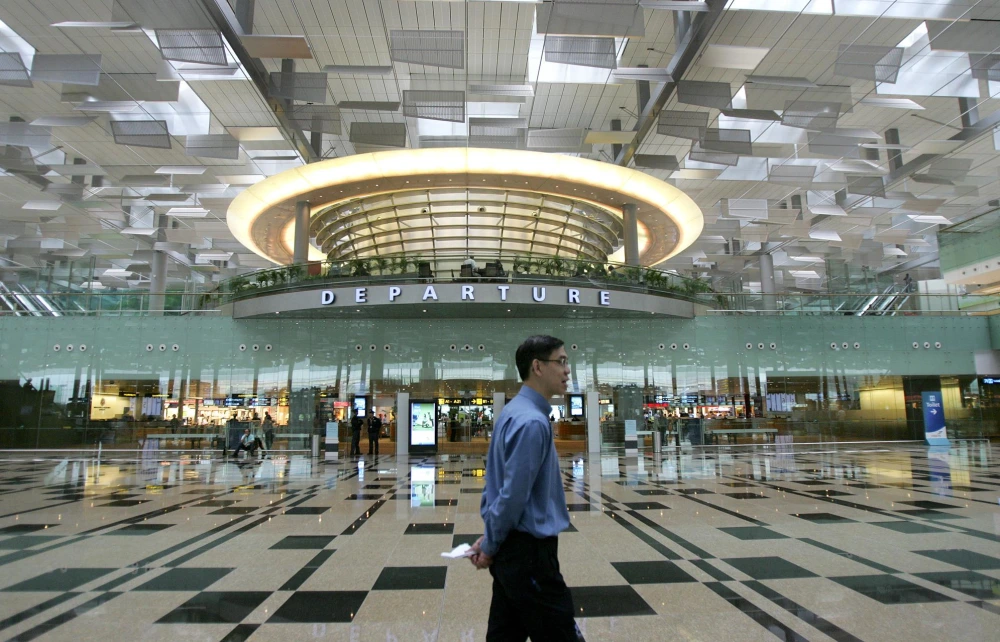
Singapore, August 8, 2025 – The air in Singapore Changi Airport hums with a quiet efficiency. It’s a sound familiar to modern travellers: the gentle whir of automated baggage belts, the soft tap of fingers on touchscreens, and the near-absence of one of travel’s most dreaded experiences—the long, snaking check-in queue. This seamless passenger flow isn’t magic; it’s the result of a deliberate technological evolution, with the self-service check-in kiosk standing firmly at its centre.
For decades, the check-in counter was an unavoidable bottleneck, a source of stress and uncertainty that defined the start of any journey. Today, those counters are increasingly supplemented, and in many cases replaced, by sleek, intuitive kiosks. These machines have fundamentally redesigned the pre-flight process, empowering passengers and streamlining airport operations on an unprecedented scale.
But how exactly do these systems work, and why have they become so indispensable to the modern travel ecosystem? This guide will walk you through the simple steps of the self-check-in process and explore why this technology matters more than ever for passengers, airlines, and airports alike.
How It Works: Your Journey from Curb to Gate in Minutes
The beauty of the self-check-in kiosk lies in its simplicity. It breaks down a complex procedure into a few easy-to-follow steps, putting the passenger in complete control. While designs vary slightly between airlines and airports, the core process is universally intuitive.
Step 1: Identify Yourself
Your first interaction with the kiosk is to identify yourself and pull up your booking. You have multiple ways to do this:
- Scan Your Passport: The most common method. Simply place your passport’s photo page on the scanner. The kiosk uses Optical Character Recognition (OCR) to read your details and instantly find your reservation.
- Use a QR Code: Most airline apps and booking confirmation emails now include a QR code. A quick scan with the kiosk’s camera is all it takes to retrieve your flight information.
- Enter Your Booking Reference: You can manually type in the six-character booking reference (PNR) or your e-ticket number.
- Swipe a Frequent Flyer Card: Your loyalty card is linked to your identity and bookings.
Step 2: Confirm Flight Details and Passengers
Once your booking appears on the screen, the kiosk will display your flight details—destination, departure time, and flight number—along with the names of all passengers in your party. You simply need to review and confirm that everything is correct, selecting the passengers you wish to check in.
Step 3: Handle Seating and Upgrades
This is where the kiosk offers valuable personalization. You’ll be shown a seat map of the aircraft, allowing you to confirm your pre-selected seat or choose a different one from the available options. This is also the prime opportunity for airlines to offer paid upgrades to extra legroom seats or a higher cabin class, which you can purchase directly on the spot.
Step 4: Add Checked Baggage
The kiosk will ask if you have bags to check in. You simply indicate the number of bags you have per passenger. Any applicable baggage fees based on your ticket type are calculated and can be paid for immediately with a credit/debit card or mobile payment.
Step 5: Print Your Documents
With everything confirmed, the kiosk prints the essential documents:
- Boarding Pass(es): The crisp, official pass you need to get through security and onto the plane.6
- Baggage Tags: Self-adhesive luggage tags with your destination and barcode. You’ll attach these to your suitcases yourself.
Step 6: Proceed to Automated Bag Drop
With your boarding pass in hand and bags tagged, you bypass the main counter and head to the Automated Bag Drop station.7 Here, you’ll scan your boarding pass, place your tagged bag on the conveyor belt, and watch as it’s automatically weighed, scanned, and sent on its way into the airport’s baggage handling system. A receipt is issued, and you are free to proceed to immigration and security.

Why It Matters: The Ripple Effect of Self-Service
The widespread adoption of airport kiosks is about far more than just busting queues. Their importance is felt across the entire travel experience, creating a win-win-win scenario for passengers, airlines, and airports.
For Passengers: The Gift of Time and Control
- Drastically Reduced Wait Times: The most obvious benefit. A process that could take 30-45 minutes during peak hours is now often completed in less than five. This reduces stress and gives passengers more time to relax, dine, or shop.
- Autonomy and Empowerment: Passengers are in control. They can manage their own seating, verify their own details, and move at their own pace, leading to a greater sense of satisfaction and confidence.
- 24/7 Convenience: Kiosks are always on, providing the same level of service whether you arrive five hours early or for the first flight of the day.
For Airlines: A Surge in Efficiency and Revenue
- Optimized Staffing: By automating repetitive check-in tasks, airlines can reallocate their ground staff to more complex roles. Agents are freed up to handle intricate ticketing issues, assist passengers with special needs, and provide a higher level of customer service where it truly counts.
- Increased Ancillary Revenue: Kiosks are perfect, consistent salespeople. They never forget to offer seat upgrades, extra baggage allowances, or other add-ons, reliably increasing ancillary revenue on every transaction.
- Reduced Errors: Automated data capture from passports and QR codes minimizes the human errors that can occur during manual data entry, leading to fewer check-in problems down the line.
For Airports: The Key to a Smarter, More Fluid Terminal
- Maximized Terminal Space: A bank of 10 kiosks can handle the same passenger volume as several traditional check-in counters but in a fraction of the physical space. This allows airports like Changi to use their valuable terminal real estate for retail, dining, and passenger amenities like the Jewel.
- Enhanced Passenger Flow: Faster processing times lead to a smoother and more predictable flow of people through the terminal. This prevents crowding, reduces congestion at security checkpoints, and creates a more pleasant, stress-free environment for everyone.
- Data and Analytics: Kiosks provide valuable data on passenger processing times, peak hours, and facility usage, allowing airport operators to make informed decisions about resource allocation and future infrastructure planning.
Conclusion: The New Standard for Global Travel
The self-check-in kiosk is no longer a novelty; it is the backbone of the modern airport. It represents a fundamental shift from a rigid, staff-led process to a flexible, passenger-centric model. By giving travellers the tools to manage their own journey, kiosks save time, reduce stress, and create a more efficient and profitable ecosystem for airlines and airports.
Here in Singapore, where innovation is in the national DNA, the seamless integration of this technology at Changi Airport serves as a global benchmark. As you tap the screen and print your boarding pass in under a minute, you’re not just checking in for a flight—you’re experiencing the future of travel, a future that is faster, smarter, and firmly in your control.
 English
  Spanish
  French
  German
  Portuguese
  Italian
  Russian
  Dutch
Dutch  Norwegian
  Arabic

