
What Are the Pros and Cons of Using a Hotel Self Check In Kiosk? A Balanced Analysis
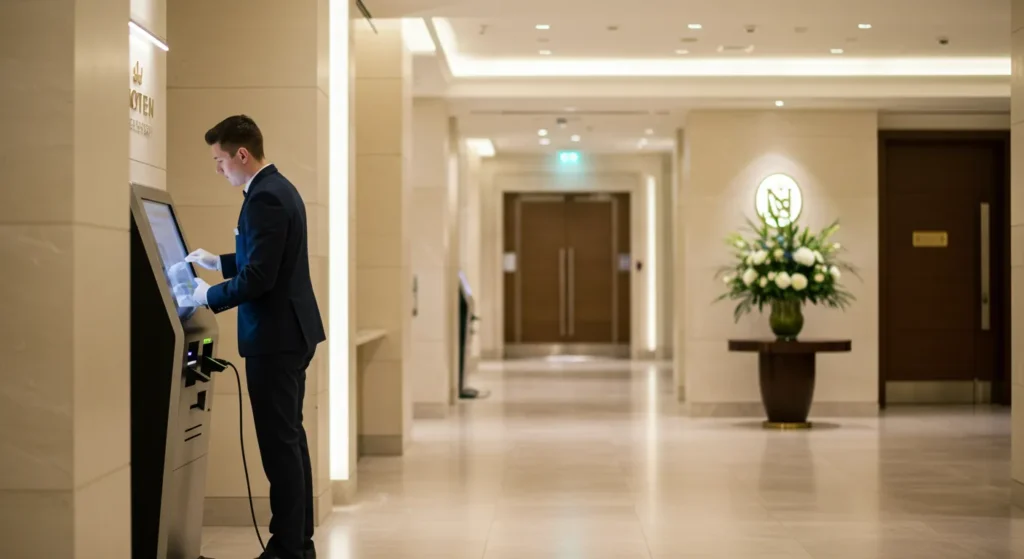
The hospitality industry is in a constant state of evolution, driven by changing traveler expectations and technological advancements. One of the most visible changes in recent years has been the proliferation of hotel self check in kiosks. These sleek, interactive terminals, reminiscent of those found in airports, are designed to streamline the arrival process, allowing guests to bypass the traditional front desk and take control of their check-in experience. While touted as the future of hotel efficiency, the adoption of self-service kiosks presents a complex mix of advantages and disadvantages. This article provides a comprehensive, balanced analysis of the pros and cons of using hotel self-check-in kiosks, examining the impact from both the guest’s and the hotel’s perspective.

The Allure of Efficiency: The Pros of Hotel Self-Check-In Kiosks
The primary driver behind the implementation of self-check-in kiosks is the promise of enhanced efficiency and a more modern guest experience. These benefits are significant for both travelers and hotel management.
For the Guest:
Speed and Reduced Wait Times:
This is arguably the most significant advantage. During peak arrival times—late afternoons and early evenings—the front desk can be swamped. Self-check-in kiosks allow guests who have pre-booked and provided their information online to check in in a matter of minutes, or even seconds, bypassing long queues entirely. This is a massive relief for weary travelers.
24/7 Availability:
Kiosks don’t require breaks or sleep. They offer a viable check-in solution for guests arriving late at night or very early in the morning, outside of regular front desk staffing hours. This eliminates the stress of arriving to a dark, unattended lobby.
Privacy and Control:
Some guests prefer a more private interaction, especially when providing personal information. Kiosks allow them to check in discreetly without feeling scrutinized. They also control the pace of the process, taking their time to review details without feeling rushed by a line forming behind them.
Convenience and Simplicity:
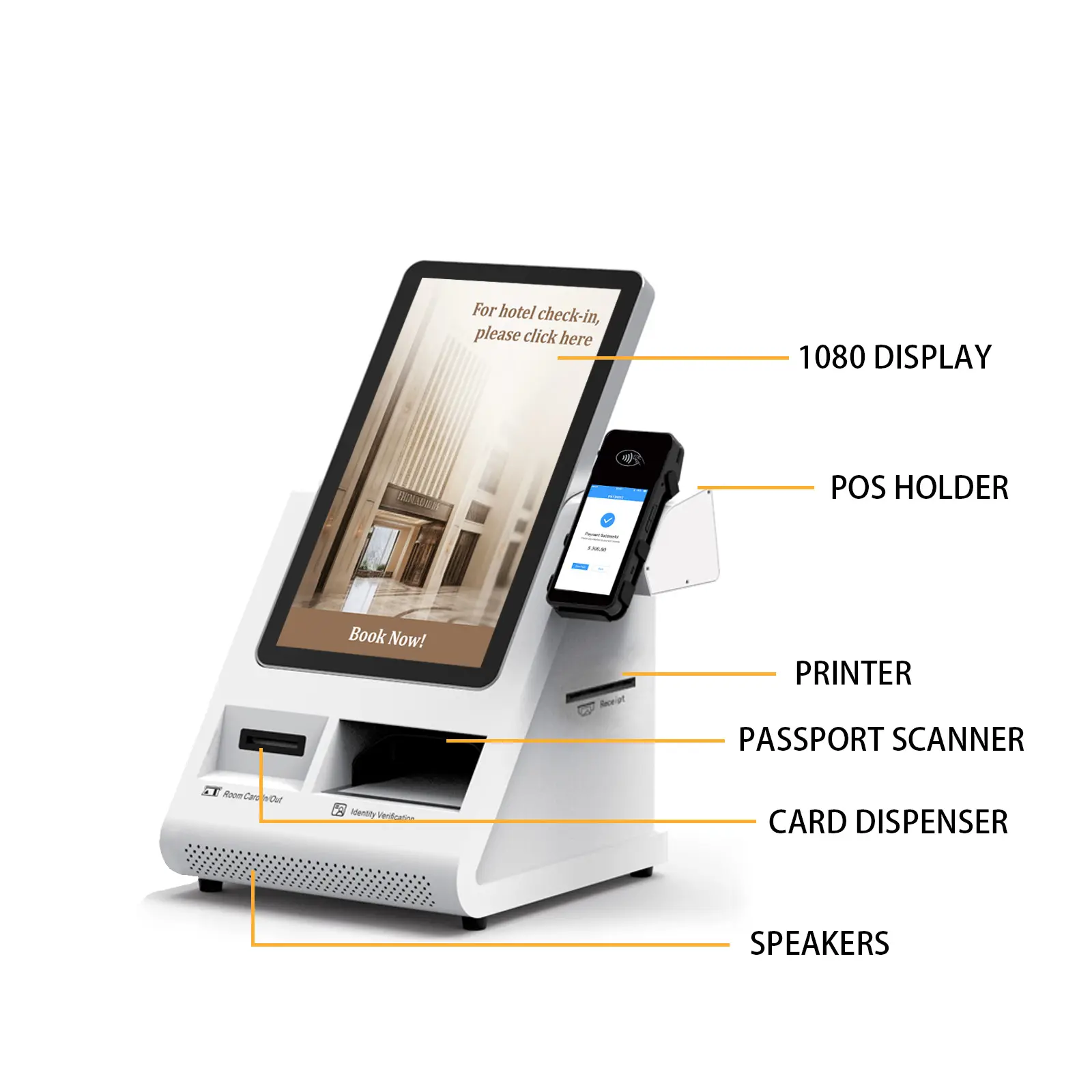
For tech-savvy travelers, the process is often intuitive and straightforward. It typically involves scanning a confirmation QR code, entering a last name, or swiping a credit card, followed by a few simple confirmation taps. The kiosk then dispenses the room key.
Direct Room Access:
Many kiosks are integrated with the hotel’s electronic lock system, allowing the kiosk to immediately encode and dispense a key card. Guests can often proceed directly to their room without any further interaction.
For the Hotel:
Optimized Staffing and Reduced Labor Costs:
Kiosks handle the most repetitive and time-consuming aspect of front desk operations: processing check-ins for guests with straightforward reservations. This allows hotels to reallocate staff resources. Instead of having multiple agents just to handle the check-in rush, staff can be deployed to more value-added roles like guest relations, concierge services, or managing VIP arrivals, leading to a more personalized and high-touch service where it counts.
Increased Operational Efficiency:
By automating routine check-ins, front desk agents are freed up to focus on more complex guest issues, special requests, and providing a higher level of personalized service to guests who need or desire it. This improves the overall flow and efficiency of the lobby.
Reduced Human Error: Automated systems reduce the potential for manual data entry errors, such as misspelled names, incorrect room assignments, or inputting wrong reservation dates. This leads to more accurate records and fewer guest complaints.
Upselling and Ancillary Revenue Opportunities:
Kiosk software can be programmed to strategically present upsell options during the check-in process. This includes offers for room upgrades, late check-outs, breakfast packages, or local tours and attractions. Guests may be more likely to consider these offers when presented in a low-pressure, self-service format.
Data Collection and Insights:
Kiosks can capture valuable data on arrival patterns, peak check-in times, and guest preferences. This information can be used for better resource planning, targeted marketing, and improving overall service delivery.
Modern Brand Image:
Offering self-service kiosks positions a hotel as modern, tech-forward, and efficient. This appeals particularly to business travelers, millennials, and Gen Z guests who value speed, convenience, and digital integration.

The Human Touch and Other Hurdles: The Cons of Hotel Self-Check-In Kiosks
Despite the clear advantages, the shift to self-service is not without its drawbacks. The cons primarily revolve around the loss of human interaction, technical limitations, and the potential for a less personal guest experience.
For the Guest:
Loss of Personal Welcome and Human Interaction:
The traditional front desk check-in is often the first point of personal contact between the guest and the hotel. A warm greeting from a friendly staff member can set a positive tone for the entire stay. Kiosks, by their nature, are impersonal and lack this crucial human touch, which can make the experience feel transactional rather than hospitable.
Inability to Handle Complex Requests:
Kiosks are excellent for standard, pre-booked reservations. However, they falter when faced with anything out of the ordinary. Guests with special requests (e.g., room changes, connecting rooms, early check-in/late check-out requests, issues with their reservation), questions about the hotel, or those needing to pay with cash or a complex method will still need to see a staff member. This can create a two-tier system and frustration if the kiosk cannot help.
Technology Barriers and Frustration:
Not all guests are comfortable with technology. Older travelers or those less familiar with touchscreens may find kiosks intimidating or confusing. A poorly designed interface, a frozen screen, or a scanner that doesn’t work can lead to significant frustration and a negative first impression, which is the opposite of the intended effect.
Potential for Impersonal Service and Lack of Local Insights: A key role of the front desk agent is to be a local expert, providing recommendations for restaurants, attractions, and transportation. Kiosks cannot replicate this personalized concierge service. Guests who rely on this information may feel left in the dark.
Exclusion of Non-Tech-Savvy or Disabled Guests: Kiosks can inadvertently exclude certain demographics. Guests with visual impairments may struggle with interfaces that are not fully accessible. Those who are not comfortable with technology may feel alienated and unwelcome.
For the Hotel:
High Initial Investment and Ongoing Costs:
Implementing a kiosk system involves significant capital expenditure for the hardware, software licensing, integration with the Property Management System (PMS) and door lock system, installation, and staff training. There are also ongoing costs for maintenance, software updates, and technical support.
Technical Glitches and Downtime:
Like any technology, kiosks are prone to malfunctions. Software crashes, hardware failures (e.g., key card encoder jam), network outages, or integration issues with the PMS can render the kiosks useless. This can lead to long lines at the front desk and frustrated guests, especially during peak times.
Security and Fraud Concerns:
While generally secure, kiosks present another potential point for data breaches or fraud. Hotels must ensure robust security measures, including PCI compliance for credit card handling, secure data encryption, and physical security for the kiosks themselves to prevent tampering.
Dehumanization of the Brand:
Over-reliance on kiosks can strip a hotel of its hospitable character. If guests feel they are just processing themselves like a transaction, it can damage the hotel’s reputation for service and care. This is particularly problematic for boutique or luxury hotels that sell themselves on personalized service.
Staff Resistance and Job Security Concerns: The introduction of kiosks can cause anxiety among front desk staff, who may fear their jobs are being automated away. This can lead to low morale and resistance to the new technology. Careful change management is required to show staff that kiosks are a tool to enhance their roles, not replace them.
The Need for a Hybrid Model:
Kiosks rarely eliminate the need for a front desk entirely. Hotels still need staff to handle complex issues, cash transactions, VIP guests, and provide that essential human touch. This means the hotel is now managing two systems—the kiosks and the traditional front desk—which can add complexity to operations.
Finding the Right Balance:
The Hybrid Approach
Given the distinct pros and cons, the most successful implementation of hotel self-check-in kiosks is not as a complete replacement for the front desk, but as part of a hybrid model. This approach leverages the efficiency of technology while preserving the invaluable human element of hospitality.
Kiosks for Speed and Simplicity:
Deploy kiosks to handle the bulk of standard, straightforward check-ins, especially during peak periods. This is ideal for business travelers, repeat guests, and anyone with a simple, pre-paid reservation who wants to get to their room quickly.
Staff for Complexity and Connection:
Maintain a staffed front desk, but reposition its purpose. Staff should focus on:
Guests with special requests, complex reservations, or issues.
Providing a warm, personalized welcome and concierge services.
Assisting guests who are uncomfortable with or have trouble using the kiosks.
Managing VIP arrivals and guests who expect a high-touch service.
Seamless Integration:
The key is seamless integration between the kiosk and the front desk systems. If a guest starts at a kiosk and encounters a problem, a staff member should be able to instantly pull up their information on their terminal and take over without the guest having to repeat everything.
Clear Signage and Staff Availability:
The lobby should have clear signage directing guests to the appropriate channel (kiosk for standard check-in, desk for assistance). Most importantly, a “kiosk ambassador” or floating staff member should always be visible and ready to help guests with the kiosks, ensuring no one feels stranded or frustrated.
This hybrid model offers the best of both worlds: the speed and efficiency of self-service for those who want it, and the personalized, human support for those who need it. It allows hotels to optimize operations while still delivering the genuine hospitality that defines a great guest experience.
Conclusion: A Tool, Not a Replacement
Hotel self-check-in kiosks are neither a panacea nor a plague. They are a powerful tool that, when implemented thoughtfully, can significantly enhance operational efficiency and guest satisfaction. The pros—speed, 24/7 availability, reduced wait times, and optimized staffing—are compelling drivers for their adoption, particularly in large, high-volume hotels and for certain traveler segments.
However, the cons—loss of personal interaction, inability to handle complexity, technology barriers, and the risk of dehumanizing the guest experience—are equally significant and cannot be ignored. The hospitality industry is built on human connection, and no machine can fully replicate the warmth, empathy, and local knowledge of a skilled hotel professional.
The ultimate success of self-check-in kiosks hinges on a hotel’s ability to find the right balance. The future is not a lobby devoid of staff, but a smarter, more efficient one. It’s a lobby where self-service kiosks handle the routine transactions, freeing up human staff to do what they do best: provide exceptional, personalized service, solve complex problems, and create the memorable, human connections that turn a simple stay into a loyal guest. In this context, the self-check-in kiosk is not a replacement for the front desk, but a strategic partner in creating a more streamlined and, ultimately, more hospitable experience.
 English
  Spanish
  French
  German
  Portuguese
  Italian
  Russian
  Dutch
Dutch  Norwegian
  Arabic

