
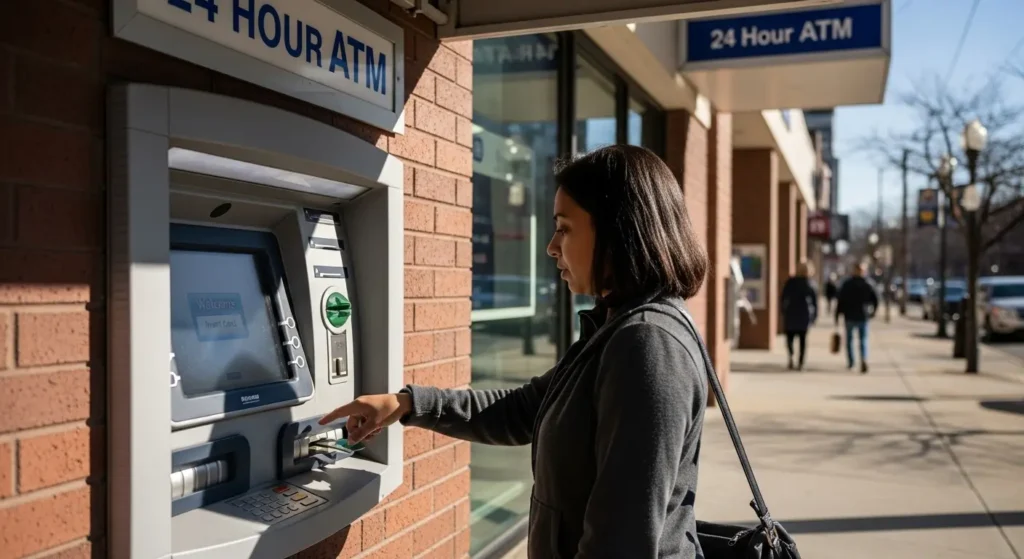
How Smart Multi-Function ATM Kiosks Reduce Cash Handling Costs and Improve Transaction Accuracy?
In today’s financial environment, banks and high-cash-volume businesses face increasing pressure to manage cash more efficiently, more accurately, and at a lower operational cost. Traditional ATMs and manual cash-handling workflows are no longer sufficient to meet modern expectations for accuracy, security, traceability, automation, and 24/7 availability.
This is why smart multi-function ATM kiosks—integrated with advanced cash acceptors, coin acceptors, cash recyclers, card readers, barcode scanners, and automated deposit technologies—are rapidly becoming the new industry standard. These next-generation kiosks not only replace many functions of traditional ATMs but also eliminate human errors, reduce labor costs, streamline cash logistics, and offer broader transaction capabilities suitable for banks, retailers, convenience stores, gas stations, foreign exchange providers, and even cryptocurrency operators.
This article provides an in-depth explanation of how multi-function ATM kiosks significantly reduce cash-handling costs and improve transaction accuracy, while also breaking down their internal components, workflows, applications, and long-term ROI benefits.
1. What Is a Smart Multi-Function ATM Kiosk?
A multi-function ATM kiosk is an advanced self-service terminal designed to automate a wide range of financial transactions beyond basic withdrawal or deposit.
Typical capabilities include:
-
Cash deposit and automated validation
-
Cash withdrawal from recycled currency
-
Cash recycling for on-premise circulation
-
Bill payment and barcode scanningBank card acceptance (debit, credit, EMV, NFC)
-
Coin acceptance, counting, and validation
-
Multi-currency support
-
Foreign exchange (optional)
-
E-wallet transactions
-
QR payment and digital voucher redemption
-
Cryptocurrency buying/selling
-
Passport or ID scan
-
Multi-language interfaces
Unlike traditional ATMs, these machines integrate elements of a kiosk, CRS (cash recycling system), POS terminal, and payment processor into one intelligent unit.
Many modern units fall under categories such as::
-
Cash and card acceptor machine
-
Cash deposit ATM machine kiosk
-
Crypto ATM cash coin acceptor kiosk
-
Custom ATM Machine Card Acceptor Cash Payment Kiosk Bank ATM Cash Deposit Machine Kiosk With Coin Acceptor Barcode Scanner
These advanced kiosk systems are now widely used by financial institutions to expand service capacity, reduce branch congestion, and modernize cash automation infrastructure.

2. Step-by-Step Cash Handling Workflow of a Multi-Function ATM Kiosk
To understand why these devices are so efficient, it’s important to examine how they automate the entire cash-handling lifecycle.
Below is a typical workflow for a cash deposit transaction:
Step 1: User Authentication
Possible authentication methods include:
-
Bank card insertion
-
NFC tapNFC
-
Mobile app QR code
-
ID or passport scan
-
Face recognition
Step 2: Selecting the Operation
Users choose from available functions such as:
-
Cash deposit
-
Cash withdrawal
-
Card payment
-
Coin deposit
-
Bill payment
-
Currency exchange
-
Crypto purchase/sale
Step 3: Inserting Cash or Coins
-
Notes are fed through the cash acceptor
-
Coins are processed via the coin acceptor
-
The kiosk automatically counts, classifies, and validates each item
-
Secure bill stacking and coin sorting begin immediately
Step 4: Cash Validation and Counterfeit Detection
The system applies multiple verification technologies:
-
Infrared analysis
-
Ultraviolet detection
-
Metal composition detection
-
Weight and dimension measurement
-
Optical imaging and spectral comparison
-
Serial-number recognition
Counterfeit notes are rejected instantly.。
Step 5: Recording and Storing the Cash
Once validated:验证后:
-
Notes go into the secure cash box or recycled into the cash recycling module
-
Coins enter the respective sorting tube or storage container
-
All records are timestamped, encrypted, and synced with backend systems
Step 6: Data Synchronization and Transaction Completion
The ATM kiosk:
-
Sends transaction data to the bank’s core system
-
Updates the user’s account
-
Prints or emails the digital receipt
-
Logs the operation for audit trails
3. Key Hardware Components of a Multi-Function ATM Kiosk
To achieve banking-grade accuracy and reliability, multi-function ATM kiosks utilize advanced internal modules that replicate and enhance many teller operations.
Below is a breakdown of the most essential components.
3.1 Cash Acceptor (Bill Validator)
The cash acceptor automatically:
-
Recognizes currency denomination
-
Identifies currency type
-
Checks authenticity
-
Detects damaged or folded notes
-
Counts notes with near-zero error
-
Rejects suspicious or unreadable bills
High-end validators support:
-
USD, EUR, GBP, CAD, AUD
-
AED, SAR, KWD
-
CNY, HKD, JPY, KRW
-
And other global currencies
This module is critical for:
-
Cash deposit ATM machine kiosks
-
Crypto ATM cash coin acceptor systems
-
High-cash retail operations
3.2 Coin Acceptor (Coin Validator and Counter)
A bank-grade coin acceptor performs:
-
High-speed coin counting
-
Metal and weight authentication
-
Multi-denomination classification
-
Fraud detection
-
Sorting and bagging
It is especially useful for:
-
Convenience stores
-
Gas stations
-
Transit hubs
-
Supermarkets
-
Crypto ATM operators
3.3 Cash Recycler
The cash recycler allows:
-
Deposited notes to be rearranged and reused for withdrawals存入的纸币将被重新排列并重复用于提款
-
Cash to circulate on site
-
Reduced cash-in-transit (CIT) needs
-
Lower cash replenishment frequency
This directly cuts operational costs.
3.4 Card Acceptor / EMV Reader
Supports:
-
Chip cards
-
Magnetic stripe cards
-
NFC contactless cardsNFC
-
EMV Level 1 & Level 2 compliance
3.5 Barcode Scanner
Used for:
-
Bill payments
-
Voucher redemption
-
Utility statements
-
Mobile wallet QR code
This is a key aspect of “Custom ATM Machine Card Acceptor Cash Payment Kiosk With Coin Acceptor Barcode Scanner” systems.
4. How Smart ATM Kiosks Reduce Cash Handling Costs
4.1 Reduce Labor Costs by 60% or More
Manual cash counting requires:
-
Tellers
-
Supervisors
-
Cashiers
-
Accounting personnel
Smart ATM kiosks automate:
-
Counting
-
Validation
-
Classification
-
Reconciliation
-
Recording
This reduces staff requirements and eliminates overtime.
4.2 Reduce Cash Transportation Costs (CIT) by up to 45%
With cash recycling, on-site deposits become withdrawal-ready cash, reducing:
-
Cash replenishment schedules
-
CIT vehicle dispatchesCIT
-
Insurance and security fees
Cash becomes self-sustaining within the terminal.
4.3 Reduce Cash Shrinkage, Loss, and Miscounts
Human error is the largest cause of:
-
Overages and shortages
-
Unbalanced drawers
-
Disputes
-
Reporting delays
Smart kiosks reduce error probability from 1% to nearly 0.01%.
4.4 Reduce Counterfeit Processing Loss
Kiosks reject counterfeit notes instantly, preventing:
-
Teller mistakes
-
Fraud losses
-
Downstream liabilities
Banks save substantial costs related to counterfeit penalties and error handling.
4.5 Reduce Branch Congestion and Operational Overhead
One kiosk performing the work of three tellers leads to:
-
Shorter queues
-
Reduced branch space needs
-
Fewer people-management tasks
-
Improved customer flow
5. Why Multi-Function ATMs Improve Transaction Accuracy
5.1 Automated Multi-Sensor Verification
Modern cash validators use:
-
Infrared (IR) scanning
-
UV imaging
-
Note dimension measurement
-
Serial-number checking
-
Metal analysis for coins
These systems ensure precision far beyond human capability.
5.2 Consistent, Repeatable, Error-Free Counting
Unlike human tellers:
-
Machines do not get tired
-
Machines do not miscount
-
Machines do not skip detection steps
Accuracy exceeds 99.98%, reducing reconciliation time drastically.
5.3 Full Digital Recording and Audit Trails
Every transaction produces:
-
Timestamp
-
Device ID
-
Operator ID (if applicable)
-
Serial-number records (optional)
-
Full digital logs
Auditing, reporting, and resolving disputes become far easier.
5.4 Automated Reconciliation
The kiosk synchronizes all data directly with:
-
Banking systems
-
Core financial platforms
-
ERP or POS software
No manual tallying is needed.
6. Industry Applications of Multi-Function ATM Kiosks6.
Smart ATM kiosks serve a wide range of industries.
6.1 Banks and Credit Unions
Ideal for:
-
Cash deposit and withdrawal
-
Cash recycling
-
Card payment
-
Passbook update (optional)
-
Bill payment
-
Retail micro-deposit services
-
24/7 branch extension
6.2 Retailers & Supermarkets
For high-cash-volume businesses:
-
End-of-day cash drop
-
Coin deposit and sorting
-
Automated cashier reconciliation
-
Instant store crediting
6.3 Cryptocurrency Exchanges & Operators
Crypto ATM cash coin acceptor machines allow:
-
Cash purchase of BTC/ETH/USDT
-
Cash redemption of crypto
-
KYC/AML compliance
-
Card payments
-
Multi-currency cash handling
These machines expand customer traffic and transaction flexibility.
6.4 Foreign Exchange Providers
Smart kiosks support:
-
Multi-currency acceptance
-
Foreign card processing
-
Passport scanning
-
Automated FX transactions
6.5 Gas Stations, Convenience Stores, Transit Hubs
These locations benefit from:
-
24-hour availability
-
High-speed cash deposit
-
Automated bill payment
-
Customer self-service
-
Reduced staffing requirements
7. Why Smart Multi-Function ATM Kiosks Are Replacing Traditional ATMs
| Traditional ATM | Multi-Function ATM Kiosk |
|---|---|
| Basic withdrawal/deposit | 10+ financial service functions10+ |
| No coin support | Full coin acceptance and validation |
| No cash recycling | Full recycling module |
| High maintenance cost | Cost-saving automation |
| Limited transaction types | Payments, crypto, QR, bills, cards, |
| Limited software integration | Cloud-based dashboards and remote monitoring |
The difference is not incremental—it is transformational.
8. Deployment Recommendations for Banks & Businesses8.
8.1 Choose Banking-Grade Components
Ensure:
-
Cash acceptors
-
Coin acceptors
-
Cash recyclers
-
EMV card readers
-
Secure metal cabinets
Meet international compliance standards.
8.2 Optimize Location and Security Layout
Consider:
-
Camera angles
-
Physical anchoring
-
Ambient lighting
-
Network stability
8.3 Use a Cloud-Based Monitoring Platform
The backend system should include:
-
Cash level monitoring
-
Predictive replenishment
-
Error alerts
-
Remote diagnostics
-
Transaction reports
9. Conclusion: The Future of Cash Handling Is Automated and Intelligent9.
Smart multi-function ATM kiosks represent the next evolution of financial self-service technology. They deliver unparalleled improvements in:Transaction accuracy
-
Operational efficiency
-
Cash recycling
-
Cost reduction
-
User experience
-
Security protection
-
24/7 availability
Businesses that adopt multi-function ATM kiosks will experience measurable results in both efficiency and profitability, while offering customers faster, safer, and more convenient financial services.
These terminals are not merely upgraded ATMs—they are the foundation of modern, automated, intelligent cash management infrastructure.
 English
  Spanish
  French
  German
  Portuguese
  Italian
  Russian
  Dutch
Dutch  Norwegian
  Arabic

