
Exporting parking kiosks from China can be a logistical nightmare without the right preparation. Inconsistent documentation and varying international regulations often lead to costly customs delays or outright shipment rejections.
That’s where a clear compliance checklist comes in. Leveraging E-Star’s 15+ years of expertise, this guide breaks down essential steps— from mastering export documentation to tailoring kiosks for global markets— to ensure hassle-free trade for distributors and importers.
Mastering Export Documentation for Parking Kiosks
Exporting parking kiosks from China requires meticulous attention to documentation to ensure smooth customs clearance and compliance with international trade standards. Proper paperwork not only avoids delays but also builds trust with international buyers. This guide covers the essential documents, compliance certifications, and common pitfalls to help you navigate the process like a ride-or-die trade professional.
“Accurate export documentation, including commercial invoices and compliance certifications, is critical for avoiding customs delays when shipping parking kiosks internationally.”
Essential Documents: Commercial Invoices, Packing Lists, and Certificates of Origin
The foundation of any export transaction includes a commercial invoice, packing list, and certificate of origin. The commercial invoice details the transaction value, which customs authorities use to assess duties. The packing list ensures all items are accounted for during shipping, while the certificate of origin confirms where the goods were manufactured—key for tariff classifications.
Importance of Compliance Certifications (e.g., ISO9001:2015)
Certifications like ISO9001:2015 demonstrate that your parking kiosks meet international quality standards. These documents reassure buyers and streamline customs checks. E-Star Kiosk, for example, provides ISO-certified products, ensuring smoother approvals in regulated markets.
Addressing Common Documentation Errors to Avoid Customs Delays
Incorrect Harmonized System (HS) codes, missing signatures, or undervalued invoices can trigger inspections. Double-check all entries and work with a freight forwarder to verify requirements for the destination country.
Case Study: Successful Documentation for E-Star Kiosk Exports
E-Star recently exported a batch of parking kiosks to Europe by ensuring complete documentation, including CE certifications. Their attention to detail prevented delays, showcasing how proper preparation pays off.
Parking Kiosk Export Documentation Checklist
| Document | Purpose | Required For | Common Mistakes | Tips |
|---|---|---|---|---|
| Commercial Invoice | Value declaration | All exports | Undervaluation | Match PO exactly |
| Packing List | Itemized shipment contents | All exports | Missing weights/dimensions | Include pallet details |
| Certificate of Origin | Tariff determination | FTA countries | Incorrect manufacturer details | Notarize if required |
| ISO Certification | Quality compliance | Regulated markets | Expired certificates | Check renewal dates |
| Bill of Lading | Shipping contract | Ocean freight | Wrong incoterm | Specify ‘FOB’ or ‘CIF’ |
Exporting parking kiosks from China becomes straightforward when you understand the documentation requirements. Partnering with experienced manufacturers like E-Star ensures you have the right certifications and support for hassle-free international shipments.
When exporting parking kiosks from China, understanding and adhering to destination-specific regulations is crucial for successful market entry. Different countries have unique safety, technical, and payment system requirements that must be met before your kiosks can operate legally. This guide will help you navigate these complex compliance landscapes.
“Proper research into regional regulations and early certification planning can prevent costly delays when deploying parking kiosks internationally.”
Understanding Country-Specific Safety Certifications (e.g., CE, UL)
Key certifications vary by region: CE marking for Europe, UL certification for North America, and CCC for China. These validate that your parking kiosks meet local electrical safety and EMC standards. E-Star’s products come pre-certified with many global standards, reducing your compliance burden.
Technical Specifications for Outdoor Parking Kiosks
Outdoor installations require weatherproofing (IP65 or higher), vandal resistance, and temperature tolerance specifications that differ by climate zone. For example, Middle Eastern markets demand higher heat resistance (up to 50°C) compared to Scandinavian countries (-30°C minimum).
Adapting to Regional Payment System Requirements
Payment integrations must comply with local financial regulations and support preferred payment methods – contactless cards in Europe, mobile wallets in Asia, or cash acceptance in developing markets. E-Star’s modular design allows easy payment system swaps to meet these regional needs.
Common Regulatory Challenges and Solutions
Frequent hurdles include unexpected testing requirements, language barriers in documentation, and last-minute specification changes. Partnering with an experienced manufacturer like E-Star that maintains international compliance teams helps navigate these challenges efficiently.
Global Parking Kiosk Compliance Requirements
| Region | Key Certification | Weatherproofing | Payment Requirements | Lead Time |
|---|---|---|---|---|
| European Union | CE, EN 60950 | IP54 minimum | EMV + Contactless | 8-12 weeks |
| North America | UL, FCC | NEMA 4 | Magstripe + EMV | 10-14 weeks |
| Middle East | GCC Conformity | IP65 + Heat Resistant | Cash-heavy systems | 6-10 weeks |
| Southeast Asia | Local Safety Marks | IP65 + Anti-corrosion | QR Code Payments | 4-8 weeks |
| Australia/NZ | RCM | IP66 | EFTPOS Integration | 8-12 weeks |
By thoroughly researching destination requirements early in your export process and leveraging E-Star’s customization capabilities, you can ensure your parking kiosk deployment meets all local regulations while minimizing time-to-market.

Streamlining Customs Clearance for Parking Kiosks
Exporting parking kiosks from China successfully requires careful attention to customs procedures and documentation standards. Many shipments face delays due to incomplete paperwork or non-compliance with destination country regulations. This guide provides actionable strategies to streamline your clearance process based on E-Star’s 15+ years of international trade experience.
“Proper documentation preparation and certification verification can reduce customs clearance times by up to 70% for parking kiosk exports.”
Verifying Global Safety Certifications for Kiosks
Before shipping, confirm all required certifications are current and properly documented. Common requirements include CE for Europe, FCC for North America, and RCM for Australia. E-Star maintains up-to-date certifications for all major markets, providing clients with ready-to-submit documentation packages.
Best Practices for Consistent Documentation
Create standardized templates for commercial invoices, packing lists, and certificates of origin. Ensure all documents use consistent product descriptions and HS codes. Implement a bulletproof quality control process where multiple team members verify each document before submission.
Working with Customs Brokers for Efficient Clearance
Partner with brokers who specialize in electronics and kiosk imports. Provide them complete documentation packages at least 5 business days before shipment arrival. E-Star’s export team can recommend trusted brokers in key markets who understand parking technology imports.
Mitigating Risks of Shipment Rejections
Common rejection reasons include mismatched paperwork, missing certifications, or incorrect tariff classifications. Maintain a checklist of destination-specific requirements and conduct pre-shipment audits. E-Star’s compliance team offers free pre-shipment reviews for clients exporting parking kiosks from China.
Customs Clearance Time Comparison by Region
| Region | Average Clearance Time | Key Documents | Common Pitfalls | E-Star Support |
|---|---|---|---|---|
| North America | 2-3 days | FCC, UL, Commercial Invoice | Missing FCC ID | Pre-certified models |
| European Union | 3-5 days | CE, DoC, Packing List | Incomplete DoC | EU Representative |
| Middle East | 5-7 days | GCC, Arabic Manuals | Translation errors | Localized docs |
| Southeast Asia | 4-6 days | Local Certificates, COO | HS Code mismatch | HS Code guidance |
| Australia/NZ | 2-4 days | RCM, Test Reports | Missing test data | Complete test kits |
By implementing these strategies and leveraging E-Star’s export expertise, businesses can significantly reduce customs-related delays when exporting parking kiosks internationally. Proper preparation transforms customs clearance from a challenge into a smooth, predictable process.
Optimizing Logistics for Parking Kiosk Exports
Exporting parking kiosks from China efficiently requires careful logistics planning to ensure timely delivery and proper installation. E-Star’s comprehensive logistical support and bulk order capabilities help international buyers maximize cost efficiency while maintaining quality standards.
“Proper packaging and coordinated shipping with installation services can reduce deployment time by 40% for international parking kiosk projects.”
Coordinating Shipping with E-Star’s On-Site Installation Services
E-Star offers turnkey solutions that combine shipping with professional on-site installation. Their teams handle everything from customs clearance to final testing, ensuring your kiosks are operational immediately upon arrival.
Packaging Standards for Outdoor Kiosks
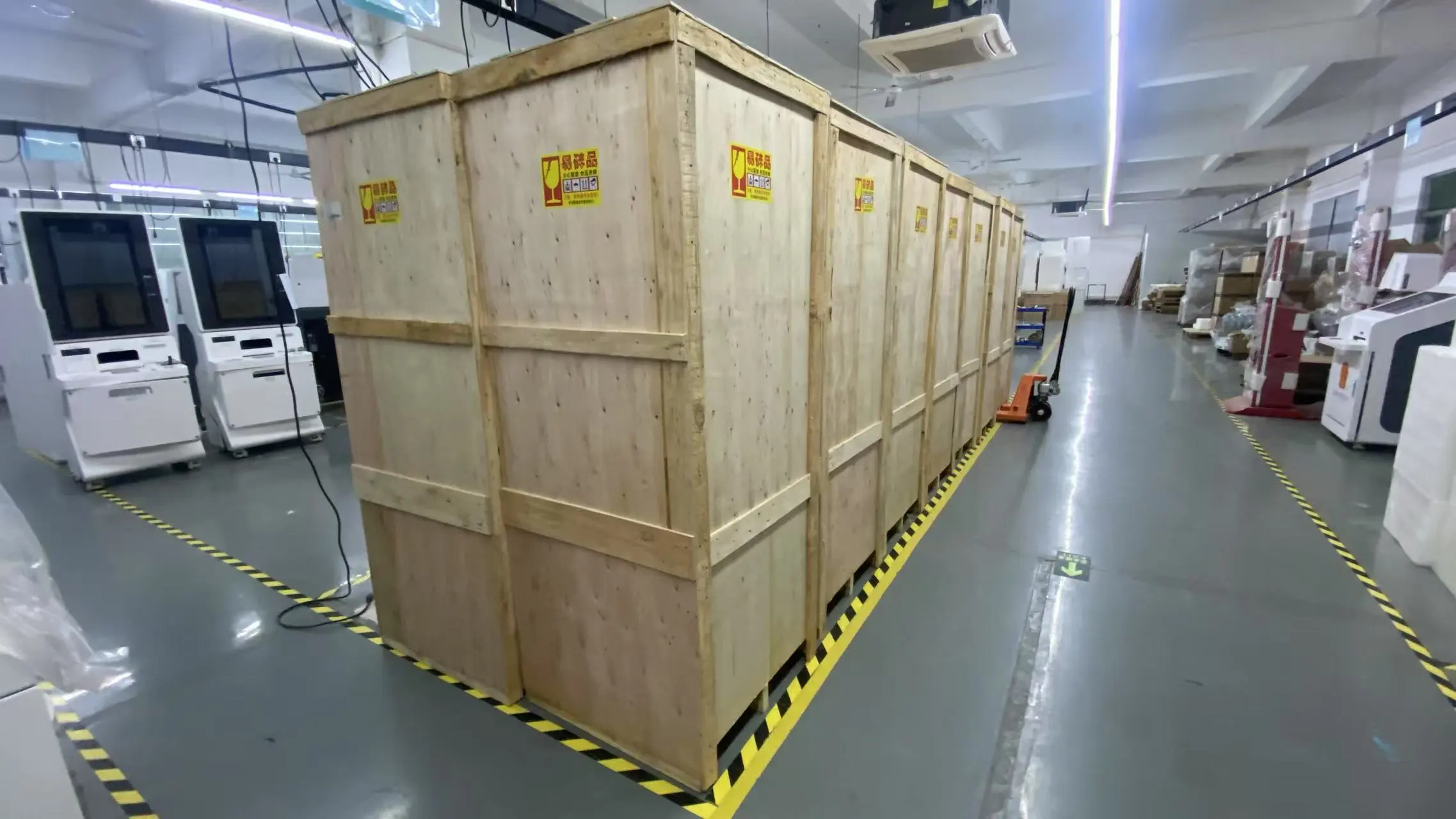
Outdoor parking kiosks require specialized packaging to withstand long sea voyages. E-Star uses weatherproof crating, shock-absorbent materials, and desiccant packs to prevent moisture damage during transit.
Managing Bulk Orders for Cost Efficiency
Ordering multiple units simultaneously can significantly reduce per-unit shipping costs. E-Star’s volume discounts and consolidated shipping options make bulk purchases particularly economical for large deployments.
Case Study: E-Star’s Successful Deployment in High-Traffic Environments
In a recent project at a Middle Eastern airport, E-Star shipped 50 parking kiosks with complete installation services. The logistics team completed the full deployment within 3 weeks, including local compliance testing.
Parking Kiosk Shipping Options Comparison
| Method | Transit Time | Cost Factor | Best For | E-Star Support |
|---|---|---|---|---|
| Air Freight | 7–10 days | High | Urgent small orders | Express customs clearance |
| Sea LCL | 35–40 days | Medium | Moderate quantities | Port-to-port coordination |
| Sea FCL | 25–35 days | Low | Large volume orders | Full container optimization |
| Rail | 20–25 days | Medium | Eurasian destinations | China-Europe rail expertise |
| Multimodal | Varies | Custom | Complex deployments | End-to-end management |
By leveraging E-Star’s logistical expertise and bulk order capabilities, businesses can achieve significant cost savings and faster deployment times when exporting parking kiosks internationally.

Ensuring Long-Term Success with After-Sales Support
When exporting parking kiosks from China, comprehensive after-sales support is just as crucial as the initial purchase. E-Star’s commitment to post-delivery services ensures your investment continues delivering value long after installation.
“Reliable after-sales support reduces downtime by up to 80% and extends parking kiosk lifespan by 3–5 years.”
E-Star’s 12-Hour Response Technical Support
Our dedicated support team guarantees responses within 12 working hours for all technical inquiries. With multilingual capabilities and remote diagnostic tools, most issues are resolved without needing on-site visits.
On-Site Training for Maintenance and Operation
E-Star provides customized training programs at your location, covering routine maintenance, software updates, and troubleshooting. This hands-on approach empowers your staff to manage kiosks independently.
Warranty Enforcement for Parking Kiosks
All kiosks include comprehensive warranty coverage. E-Star maintains regional service centers and stocked spare parts to handle claims promptly, minimizing operational disruptions.
Building Long-Term Partnerships with Importers
Beyond sales, E-Star focuses on lasting relationships with importers. Regular performance reviews, proactive maintenance alerts, and upgrade recommendations reflect our partnership-first philosophy.
After-Sales Support Services Comparison
| Service | Response Time | Coverage | Languages Supported | E-Star Advantage |
|---|---|---|---|---|
| Technical Support | 12 hours | Global | 8 | Dedicated account managers |
| Training | 2-week notice | On-site/Remote | 5 | Customized curriculum |
| Warranty Claims | 48 hours | Regional centers | N/A | Priority parts inventory |
| Software Updates | Quarterly | Automatic | N/A | Backward compatibility |
| Performance Reviews | Bi-annual | Remote | 5 | Actionable insights |
By choosing E-Star for your parking kiosk needs, you gain more than equipment – you gain a long-term partner committed to your ongoing success in the parking industry.
Conclusion
Exporting parking kiosks from China can be straightforward with the right approach. With over 15 years of experience, I’ve learned that thorough documentation, strict compliance, and dependable logistics are key to seamless operations.
E-Star simplifies this process, acting as your trusted partner. We don’t just provide kiosks; we ensure every unit meets international standards and arrives ready to work. From customs clearance to ongoing support, we’re committed to your success.
As you plan your next export, consider what makes your business unique. Teaming up with a partner who aligns with your goals can transform the process. Ready to optimize your kiosk deployment? Expert support is just a step away.
FAQ
-
Q1: What are the key regulations for exporting parking kiosks from China?
A1: The key regulations for exporting parking kiosks from China include obtaining necessary export licenses, ensuring compliance with international standards, and ensuring that electronic components meet safety certifications like CE or RoHS.
-
Q2: How do I ensure compliance with export regulations for Chinese parking kiosks?
A2: Ensure compliance by consulting with export compliance specialists, getting all necessary certifications, and following China’s export control laws and regulations applicable to electronic goods.
-
Q3: What documents are required for exporting parking kiosks internationally?
A3: Documents required include a commercial invoice, packing list, export license, bill of lading, and potentially a certificate of origin, depending on the destination country.
-
Q4: Where can I find reliable manufacturers for parking kiosks in China?
A4: Reliable manufacturers can be found through trade fairs, verified directories like Made-in-China.com, and industry-specific marketplaces after verifying their credentials and compliance records.
-
Q5: What certifications are necessary for exporting parking kiosks from China?
A5: Necessary certifications can include CE, RoHS, and HDMI certifications, among others, to comply with global standards for electronic devices.
-
Q6: How does the US-China trade relationship affect the export of parking kiosks?
A6: Trade tensions may affect tariffs and trade agreements impacting the cost and ease of exporting parking kiosks to the US, necessitating continuous monitoring of regulatory changes.
-
Q7: What are the benefits of exporting parking kiosks from China?
A7: Benefits include access to competitive pricing, technological advancements, and a well-established manufacturing base, as well as a variety of customizations offered by Chinese manufacturers.
-
Q8: Are there any specific challenges when exporting parking kiosks from China to Europe?
A8: Challenges include meeting EU regulatory standards such as CE marking, managing logistic costs, and navigating complex tariff and non-tariff barriers.
 English
  Spanish
  French
  German
  Portuguese
  Italian
  Russian
  Dutch
Dutch  Norwegian
  Arabic