
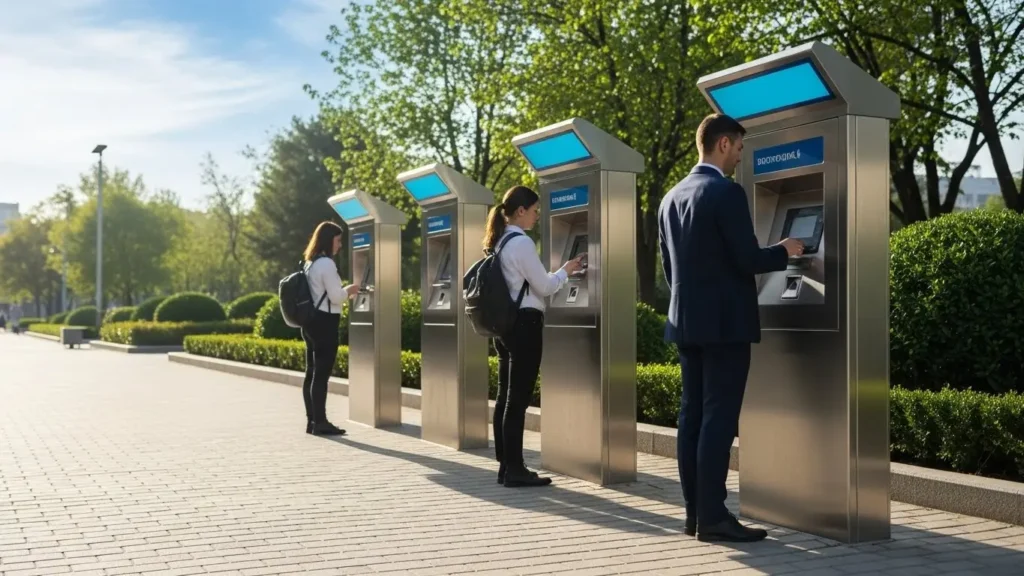
In the past decade, public services around the world have moved from slow, paperwork-heavy procedures to modern, digital, and citizen-friendly experiences. At the heart of this transformation is a technology that many people now encounter every day—government self-service kiosks. These smart terminals, often located in administrative centers, hospitals, transportation hubs, or community buildings, make it easier for citizens to complete essential services without waiting in line or dealing with complicated manual steps.
As governments face increasing demands for efficiency, transparency, and accessibility, smart kiosks have quickly become a practical and scalable solution. They not only reduce workload pressure on staff but also empower citizens to access services with speed, privacy, and convenience. In this article, we explore why government kiosks are booming globally, how they improve daily life for citizens, and why more countries are adopting them as a core part of their digital governance strategy.
The Shift Toward Citizen-First Government Services
People today expect digital services in every aspect of life—from online shopping to mobile banking to telemedicine. When government processes remain slow, manual, or inaccessible, frustration grows quickly. This is why many governments are embracing self-service kiosks as a key part of their digital transformation strategy.
These kiosks enable citizens to handle tasks independently, often in just a few minutes. Common functions include:
-
ID card applications or renewals
-
Passport services
-
Social security inquiries
-
Medical card registration
-
Utility fee payment
-
Traffic ticket inquiries
-
Government form submissions
-
Appointment scheduling
-
Document printing and certificate collection
By shifting routine tasks to automated terminals, governments reduce bottlenecks and free up staff to focus on more complex services.
Convenience: The Number One Reason Citizens Prefer Self-Service
One of the strongest advantages of government kiosks is simple: convenience. Instead of waiting in long queues or taking time off work to visit a government office, citizens can visit a self-service terminal at a nearby location and complete tasks quickly.
These kiosks often operate beyond office hours, giving people more flexibility. For example, a citizen who needs to print a certificate or pay a bill can do it after work or on weekends without rushing to a government building.
The user interface of modern kiosks is intuitive and familiar. Large touchscreens, multilingual options, on-screen guidance, and integrated security features help citizens perform services confidently. Even users who are not tech-savvy find them easy to navigate, making government services more inclusive and accessible.
Reducing Administrative Pressure and Operational Costs
Government agencies traditionally handle large volumes of paperwork every day. Processing forms, issuing certificates, and managing queues require significant manpower and office resources. With self-service kiosks, much of this workload is automated.
This brings several cost-saving benefits:
-
Reduced manual data entry
-
Fewer physical counters required
-
Lower printing and administrative overhead
-
Less staff needed for basic inquiries
-
Streamlined workflows and faster service cycles
At the same time, automation significantly reduces human errors. Incorrect data entry, lost documents, and long processing cycles become far less common. Agencies can focus on accuracy, service quality, and citizen experience rather than repetitive tasks.
Improving Service Accessibility Across Different Regions
For large countries or areas with dispersed populations, access to government offices can be a major challenge. Rural residents may have to travel long distances to complete even simple tasks. Government kiosks solve this problem by allowing services to be distributed across communities.
Kiosks can be installed in:
-
Village centers
-
Community halls
-
Schools
-
Hospitals
-
Public libraries
-
Subways or transportation hubs
-
Commercial buildings
With this distributed network, citizens from all backgrounds enjoy equal access to government services. This inclusivity is especially valuable for seniors, people with disabilities, and low-income families who may struggle with traditional administrative workflows.
Faster Processing and Real-Time Data Integration
Modern government kiosks are connected to secure digital government systems, meaning data is processed and updated in real time. Whether citizens are submitting applications, printing official records, or accessing personal data, the process is much faster than traditional manual procedures.
Some kiosks also integrate with biometric verification systems such as fingerprint or facial recognition, ensuring accurate identity validation. This strengthens security while maintaining a smooth user experience.
Real-time data processing also helps government departments collaborate more effectively. Records are updated immediately, reducing delays and inconsistencies between different agencies.
Promoting Paperless Governance and Sustainability
Environmental responsibility has become a global priority. Governments are seeking ways to adopt greener practices while improving operational efficiency. Self-service kiosks support paperless workflows by digitizing the majority of processes.
Citizens can:
-
Submit digital forms
-
Receive electronic certificates
-
Scan QR codes for records
-
Make e-payments without printing receipts
Not only does this reduce paper consumption, but it also lowers storage needs and minimizes the risk of lost or damaged documents. Over time, these small improvements contribute to a cleaner, more sustainable public service system.
Enhancing Public Trust Through Transparency
Trust is critical for effective governance. When citizens feel that services are slow, inefficient, or difficult to access, it negatively impacts their perception of government credibility. Self-service kiosks help rebuild and strengthen public trust by offering a transparent and predictable service experience.
The process is clear:
You follow the steps, complete the action, receive immediate feedback, and walk away with the result. This eliminates unnecessary complexity and helps citizens feel more in control of their interactions with government agencies.
Additionally, digital records reduce the risk of corruption or unauthorized changes, creating a fairer service system for everyone.
Supporting Multilingual and Inclusive Public Services
Countries with multicultural populations require services in multiple languages. Self-service kiosks make multilingual support easy and scalable. Citizens can select their preferred language on the screen, ensuring they fully understand the process.
Accessibility features such as adjustable text size, audio guidance, and simple navigation help seniors and users with disabilities enjoy the same level of convenience. A government service that is truly inclusive is one that benefits society as a whole.
Future Trends: Smarter, Faster, More Connected Kiosks
As technology continues to evolve, government self-service kiosks are expected to become even more advanced. New trends include:
-
AI-powered chat guidance
-
Real-time video assistance with government agents
-
Integration with mobile apps and digital ID wallets
-
Contactless biometrics
-
Blockchain-secured document processing
-
Cloud-connected service networks
The combination of these technologies will bring public services to an even higher level of speed, efficiency, and personalization.
Why Governments Are Rapidly Expanding Kiosk Deployment
The global rise in government kiosk adoption is driven by a combination of demand, efficiency, and long-term practicality. For governments, smart kiosks are a cost-effective way to modernize services. For citizens, they provide convenience, speed, and freedom.
This win-win model ensures that kiosks will continue to play a central role in how governments deliver essential services. As more governments commit to digital transformation, self-service kiosks will become an everyday part of public life—accessible, reliable, and essential.
 English
  Spanish
  French
  German
  Portuguese
  Italian
  Russian
  Dutch
Dutch  Norwegian
  Arabic

