
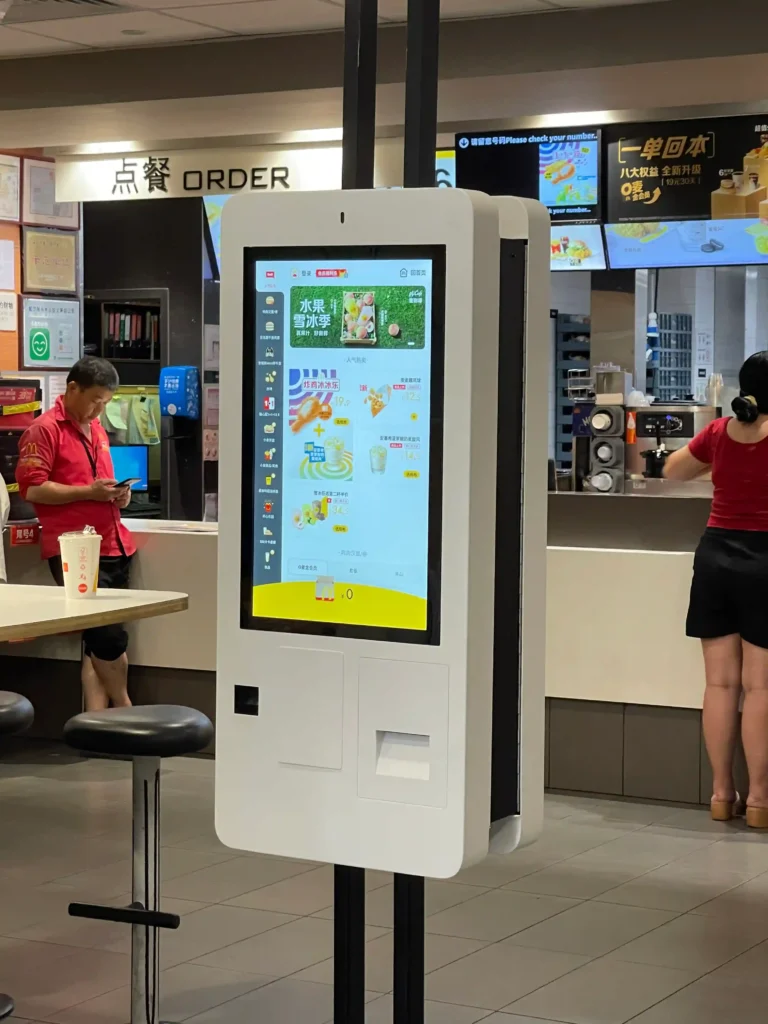
In today’s retail world, customers expect one thing above everything else—a smooth and fast shopping experience. The moment shoppers feel stuck in long lines, crowded aisles, or poorly designed store layouts, they simply leave. And that’s exactly where self-checkout kiosks make a huge difference.
Self-checkout is no longer just a convenient extra. For many retailers, it has become a key part of modern store design, helping improve traffic flow, reduce bottlenecks, and create a more comfortable shopping environment. Whether it’s a supermarket, convenience store, boutique retail shop, or a 24/7 unmanned store, the placement and use of self-checkout kiosks can completely reshape how customers move through the space.
In this article, we’ll dive deep into how self-checkout kiosks improve store layout and optimize customer traffic, why they matter, and how retailers can strategically use them to operate smarter and more efficiently.
Self-Checkout Kiosks Shift the Traditional Store Flow
For decades, retail layouts revolved around one thing:
the main checkout counter.
Customers shop → push carts to the front → queue in a single congested area → pay → leave.
This model creates predictable problems:
-
Long lines during peak hours
-
Wasted space around the checkout counters
-
Bottlenecks that block aisles
-
Stress on staff
-
Pressure on customers
Self-checkout kiosks break this old system entirely. Instead of forcing all customers to funnel through one point, retailers can spread out multiple smaller checkout points, allowing smoother movement and reducing unnecessary crowding.
This change alone dramatically improves the in-store experience.
Smaller Footprint, Smarter Layout
A traditional checkout counter takes up a lot of space—big counters, conveyor belts, drawers, POS terminals, chairs, and areas for employees to move around. Most stores dedicate 20–40% of the front area just for checkout lines.
Self-checkout kiosks require only a fraction of that.
A typical compact kiosk:
-
Uses as little as one-third the space of a cashier lane
-
Requires no staff station
-
Can be installed in flexible configurations
-
Fits well even in small convenience stores or corner markets
Retailers can free up prime space and use it for:
-
More product displays
-
Promotional zones
-
Cross-selling shelves
-
Wider aisles
-
Seasonal or impulse products
In other words, kiosks don’t just save space—they create opportunities for revenue.
Better Traffic Flow Means Better Shopping Experience
Good retail design is all about how people naturally move.
When self-checkout kiosks are placed strategically, they gently guide customers through the store without forcing them into crowded areas.
Here’s how self-checkout improves traffic flow:
1. Multiple Exit Points Reduce Crowding
Instead of pushing every customer to the front, stores can place kiosks:
-
Near side exits
-
In the middle of the store
-
At the back (for quick trips)
-
Near express lanes
-
At self-service sections
This creates natural distribution of movement.
2. Faster Checkouts Reduce Line Length
Shorter lines mean customers don’t “pile up” around the main checkout area, improving the entire store’s circulation.
3. Less Stress, More Comfort
People hate tight spaces. When kiosks prevent lines from blocking aisles, the store feels more open and welcoming.
4. Encourages Quick Shopping Trips
Many people run in just to buy:
-
One drink
-
One snack
-
One pack of batteries
-
One loaf of bread
Self-checkout kiosks let them grab and go without interrupting customers with full carts.
This increases customer satisfaction and also boosts sales frequency.
Flexible Placement Options Give Retailers More Control
One of the biggest advantages of self-checkout kiosks is flexibility.
Retailers can place kiosks wherever they make the most sense:
Front-of-Store
Ideal for replacing traditional checkout lanes.
Middle-of-Store
Perfect for “quick purchase stations,” similar to how many modern supermarkets do it.
Near High-Traffic Zones
Such as:
-
Alcohol sections (with ID check features)
-
Deli areas
-
Grab-and-go food zones
-
Bakery sections
Near Store Entrance
A popular choice for 24/7 unmanned or hybrid stores.
Near Exit for Fast Transactions
Common in convenience stores and gas stations.
The ability to install kiosks in different areas allows retailers to customize their store layout to customer behavior, not the other way around.
Self-Checkout Helps Eliminate Dead Zones
Every retail store has “dead zones”—places customers rarely visit.
By placing kiosks strategically, retailers can bring foot traffic into:
-
Corners
-
Back areas
-
Underutilized zones
-
Newly renovated sections
This helps:
-
Improve visibility of more products
-
Increase chances of impulse purchases
-
Balance the entire store layout
Self-checkout kiosks act like magnets that pull customers toward areas where you want them to go.
More Open Space = Better Shopping Psychology
People shop better when they feel comfortable.
Cluttered spaces, long lines, or congested aisles can make customers feel rushed or frustrated. When a store introduces self-checkout kiosks:
-
The entrance area becomes cleaner
-
The flow is more organized
-
The checkout zone looks modern and open
-
Customers feel more relaxed
A clean and open front area creates a strong first impression and can even influence how customers perceive your brand.
Improved Flow = More Sales
This part matters for retailers.
When store layout improves, you get:
More time shopping
Less time waiting in line means more time browsing.
More impulse purchases
Customers walking past promotional items without stress = more sales.
Better product exposure
Freeing up checkout space lets retailers display more high-margin items.
Higher operational efficiency
With fewer bottlenecks, staff can focus on stocking shelves or helping customers buy.
Faster peak-hour processing
More customers handled = more sales volume.
Self-checkout isn’t just “nice to have.”
It directly improves profitability.
Self-Checkout Kiosks Reduce Labor Pressure
While layout and traffic flow benefit customers, kiosks also help staff.
-
Staff no longer need to manage long lines
-
Fewer employees stuck at checkout
-
More workers can focus on customer service
-
Team members can restock faster and keep aisles clean
-
Peak hours become easier to manage
Instead of relying heavily on cashiers, stores can operate with fewer front-line workers without sacrificing service quality.
Why Customers Love the New Layout
Here’s something retailers often overlook:
Shoppers actually prefer stores with self-checkout.
Because:
-
They feel more in control
-
They avoid awkward interactions
-
They don’t wait in long lines
-
They move faster
-
The store feels more modern and organized
When the store layout is simpler and less crowded, the customer’s whole experience improves.
This leads to:
-
Better reviews
-
Higher loyalty
-
More repeat business
Design Tips for Retailers Installing Self-Checkout Kiosks
If you’re adding kiosks to your store, consider these layout and flow tips:
1. Leave Open Space Around the Kiosk
People need room to stand, scan, bag, and walk away.
2. Maintain Clear Visibility
Kiosks should be easy to locate.
3. Keep Nearby Shelves Low
Don’t block line of sight.
4. Add Impulse Products Nearby
Snacks, drinks, small electronics—these work extremely well.
5. Use Floor Markings or Lighting
Guide customers without them even realizing.
6. Avoid Installing Too Close to the Entrance
You don’t want customers getting stuck right as they walk in.
7. Add a Small Assistance Station
Staff can help customers easily, even if you have multiple kiosks.
Self-Checkout Is Becoming the New Retail Standard
Across the US and Europe, self-checkout has become a must-have, not a trend.
Walmart, Kroger, Tesco, Carrefour, Aldi, Target, Whole Foods, 7-Eleven, and thousands of small retailers are redesigning their layouts around self-checkout-first models.
Why?
Because:
-
Stores look cleaner
-
Customers move better
-
Checkout is faster
-
Staff stress is lower
-
Sales are higher
-
Space is used smarter
Retailers that adopt modern store layouts gain a major competitive advantage.
Conclusion: Better Flow, Better Stores, Better Business
Self-checkout kiosks are not just about scanning groceries—they’re powerful tools that transform the entire store environment.
They help retailers:
-
Improve store layout
-
Reduce congestion
-
Create comfortable shopping experiences
-
Simplify traffic flow
-
Boost sales
-
Enhance brand image
-
Operate more efficiently
When customers move freely and checkout is simple, everything works better.
Self-checkout kiosks are becoming the heart of modern retail design, shaping the way customers shop today and in the future.
 English
  Spanish
  French
  German
  Portuguese
  Italian
  Russian
  Dutch
Dutch  Norwegian
  Arabic

