
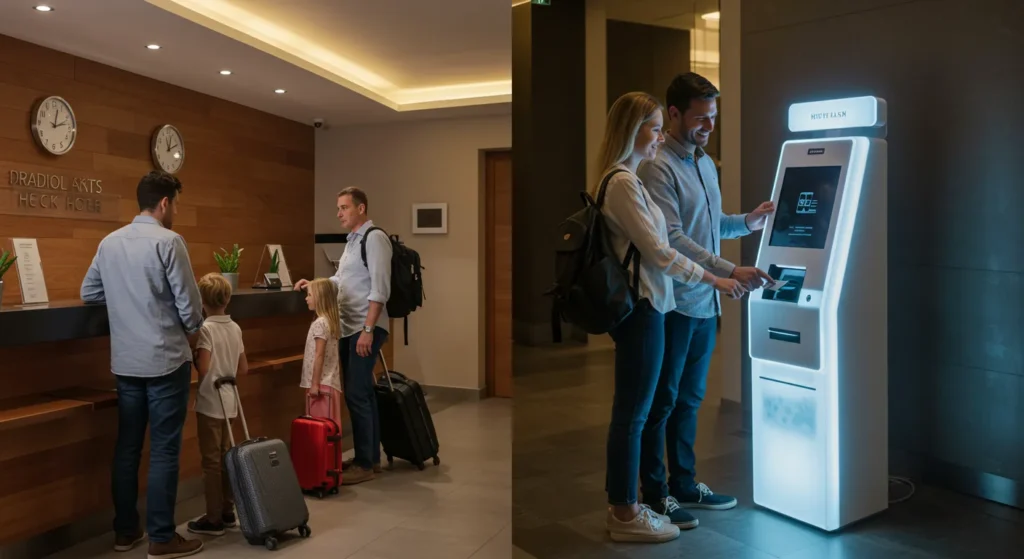
Checking In to the Future: Why a Hotel Kiosk is No Longer a Luxury, But a Necessity
The hotel lobby has long been the heart of the guest experience—a stage where first impressions are made and lasting memories begin.1 For decades, the centerpiece of this stage has been the front desk, a bustling hub of manual processes. But in an era defined by digital convenience and heightened guest expectations, the traditional check-in model is showing its age. Lengthy queues after a long flight, misplaced reservations, and overworked staff juggling multiple tasks can quickly turn a warm welcome into a frustrating ordeal.
This is where the hotel check-in/out kiosk steps into the spotlight. Far from being an impersonal piece of technology, the self-service kiosk has evolved into a strategic asset that addresses the core challenges of the modern hospitality industry. It’s a solution that simultaneously elevates the guest experience, empowers your staff, streamlines operations, and creates new revenue opportunities.
For today’s hotelier, the question is no longer “Should we get a kiosk?” but rather “How can we afford not to?” Sticking to the old ways means risking being outpaced by competitors who have embraced a smarter, more efficient, and more guest-centric approach. This article will explore the critical reasons why a check-in/out kiosk is an essential investment for any hotel looking to thrive in the competitive landscape of 2025 and beyond.
Eradicating the Queue and Revolutionizing the First Impression
The first impression is everything. After a long and stressful journey, the very last thing a guest wants is to stand in a line. The front desk queue is the single greatest point of friction in the traditional arrival experience.
The Traditional Bottleneck: A standard check-in process involves a receptionist locating the booking, verifying identity, processing payment, and programming key cards. While a skilled professional can do this efficiently, they can only serve one guest at a time. During peak arrival or departure times, this linear process inevitably creates a bottleneck. This initial wait immediately puts the guest in a negative frame of mind, tainting their perception of your hotel before they’ve even seen their room.
The Kiosk as the Express Lane: A self-service kiosk obliterates this bottleneck. By providing a bank of kiosks, you empower guests to check in simultaneously. A process that could take 5-10 minutes at a busy front desk is reduced to under 60 seconds at a kiosk. Guests can quickly find their reservation using their name, confirmation number, or even a QR code from their booking email. They can verify their details on-screen, process payment securely via the integrated terminal, and have their room keys dispensed instantly. This swift, seamless, and queue-free arrival is the new standard of modern hospitality—a first impression that says, “We value your time.”

Liberating Your Staff to Deliver True Hospitality
One of the most persistent myths about automation is that it replaces people. In hospitality, the opposite is true. Kiosks don’t eliminate your staff; they elevate them.
From Transactional Clerks to Experience Ambassadors: Think about the tasks that occupy a front desk agent’s time: typing, clicking, processing payments, and cutting keys. These are transactional, repetitive tasks. While necessary, they are not the essence of hospitality. True hospitality lies in the human connection—the warm welcome, the personal recommendation for a local restaurant, the ability to solve a guest’s unique problem, or simply sharing a genuine smile.
By automating the transactional elements of check-in and check-out, kiosks free your staff from behind the counter. They can be redeployed into more valuable, guest-facing roles. They become lobby ambassadors, free to greet arriving guests, offer assistance to those using the kiosks, answer questions in detail, and provide the kind of high-touch, personalized service that builds loyalty and generates rave reviews. The kiosk handles the “what,” so your team can focus on the “wow.”
A 24/7 Service That Drives Revenue and Efficiency
The operational rhythm of a hotel is non-stop, but your staffing levels can’t always be. Kiosks provide a powerful solution for operational consistency and revenue generation around the clock.
The End of the Night Audit Scramble: For late-arriving guests, the check-in experience can be particularly poor, often handled by a skeleton night staff juggling multiple responsibilities. A kiosk ensures that a guest arriving at 2 AM receives the same swift and efficient welcome as a guest arriving at 2 PM. This 24/7 self-service capability is a massive selling point for business travelers and those affected by flight delays.
Unlocking Ancillary Revenue: The kiosk is a perfect, no-pressure salesperson. During the check-in flow, the system can be programmed to offer enticing, relevant upsells.
- Room Upgrades: “For just $45 more, upgrade to a Sea View Suite?”
- Packages: “Add our Breakfast Package for a special rate.”
- Amenities: “Book a late check-out now for 50% off.”
Unlike a staff member who might feel awkward upselling or forget to mention options, the kiosk presents these offers with rich visuals to every single guest. This consistent, automated upselling strategy can significantly boost ancillary revenue, turning the check-in process from a cost center into a profit center.12

Enhancing Operational Accuracy and Security
Manual processes are inherently prone to human error and present security challenges. Kiosks introduce a layer of digital precision and security that protects both the guest and the hotel.
Data Accuracy: Kiosks minimize the chance of errors in data entry. Guests verify their own information, reducing the risk of typos in names or contact details. Payment processing is handled by a secure, PCI-compliant terminal, which drastically lowers the risk associated with manual credit card handling and ensures a secure transaction every time.
Secure Key Management: The automated dispensing of key cards is more secure than a manual process. The kiosk logs every transaction, providing a clear audit trail of which keys were issued for which rooms and at what times. This minimizes the potential for unauthorized key duplication or mishandling. For check-out, many kiosks allow guests to simply drop their key cards into a designated slot, streamlining the process and ensuring keys are returned securely for reprogramming. This operational accuracy saves time, reduces potential security risks, and provides peace of mind for management.
Conclusion: Check-In to a More Profitable, Guest-Centric Future
In the competitive world of hospitality, standing still is moving backward. The traditional front desk model, with its inherent limitations, is no longer sufficient to meet the demands of the modern traveler or the operational needs of a forward-thinking hotel.
A check-in/out kiosk is far more than just a machine; it is a comprehensive solution. It is a tool for delighting guests with speed and convenience, for empowering staff to deliver exceptional human service, for driving revenue through intelligent upselling, and for running a more secure and efficient operation. It is an investment that pays dividends in guest satisfaction, positive reviews, employee morale, and ultimately, your bottom line. By embracing this essential technology, you are not just checking in a guest; you are checking in to the future of hospitality.
 English
  Spanish
  French
  German
  Portuguese
  Italian
  Russian
  Dutch
Dutch  Norwegian
  Arabic

